The outsourcing services market continues to grow each year and is projected to reach
$504.9 billion in 2025.Still, some believe that outsourced development comes with too many risks, so much so that even investors sometimes push back against the idea of hiring an outsourcing partner. Let’s break down the pros and cons of outsourcing development and settle this debate once and for all.
Outsourcing teams are not remote freelancers
One of the challenges is that many companies don’t want to associate themselves with “remote work.” While Covid forced a shift in perception, and distributed teams are now the norm, the term still raises concerns about structure and control.
That’s why many software outsourcing companies now emphasize dedicated development teams and clear delivery processes, distancing themselves from the “remote freelancer” stereotype and offering scalable, well-integrated collaboration.
Can you find senior-level developers through outsourcing?
Some believe that there are few experienced developers in outsourcing, assuming that the best talent ends up in product companies. But that’s not always true. The choice of an outsourcing software development company often depends on the surrounding environment. In emerging economies, where startup funding is limited and legislative support for investment is weak, outsourcing remains the strongest path for leveraging the region’s massive IT talent potential.
Competition in the global outsourcing market is growing every year, which leads to improved service quality and lower costs. Interestingly, many outsourcing companies eventually evolve into product companies.
It is also worth taking into consideration the developing culture and business attitude in the country. Many outsourcing companies are founded by former developers who spent years building their careers in large software firms. They bring with them hands-on experience in project management, software development, and client communication, which helps improve quality year after year. Technical founders bring both coding skills and real-world business sense to the table.
Add in the rise of IT clusters and startup-friendly tech zones, and you get an industry that’s leveling up fast. The concentration of bright minds in such places leads to significant cultural and professional growth across the entire industry.
Protecting intellectual property in outsourced development
What about intellectual property theft or personal data leakage? Just do a little research before choosing a partner. You can view the
intellectual property regulations by country. In addition, nowadays, many companies operate in the American legal field, their head offices are located in the United States, and contracts are signed in several languages with the advantage of the English version.
Solving the communication gap in software outsourcing
Indeed, some companies that worked with outsourcing software development have faced communication and misunderstanding challenges. A lack of understanding of the entire project scope often leads to cost increases and missed release dates. These kinds of issues may arise during a full software development lifecycle, which is why we recommend reading our latest article on the Discovery Phase. (coming soon)
Also, there can be cultural and language barriers in outsourcing, but since the beginning of the IT industry boom, English has become a standard requirement, and as a result, communication issues in outsourcing are gradually decreasing year by year.
Why startups choose outsourcing?
As you can imagine, managing outsourcing development is as much a skill as many others. And if you spend a little time on it, then you can get huge benefits:
- Development costs reducing
- Technical expertise and IT-consulting that your company does not have
- Fast scalability
If you're worried about staying in control of the development process, it’s a good idea to have a small founding team on your side, someone who can oversee progress, make quick decisions, and stay aligned with the product vision.
Key takeaways for founders considering outsourcing software development
The nature of outsourced software development is inherently dynamic. Teams are typically assembled from specialists with diverse skills, brought together for a specific project, and then disbanded once the work is complete. This structure makes them highly adaptable and well-prepared for collaborative development.
When choosing your outsourcing partner, look for people who are sociable, open-minded, with good soft skills. Make sure that English proficiency is non-negotiable. Communicating directly with the whole team leads to better alignment, faster problem-solving, and smoother cooperation.
And above all, don’t hesitate to bring your business challenges to the table. The best results come from open dialogue, shared ownership, and mutual problem-solving, because, as Socrates said, truth is born in dialogue.
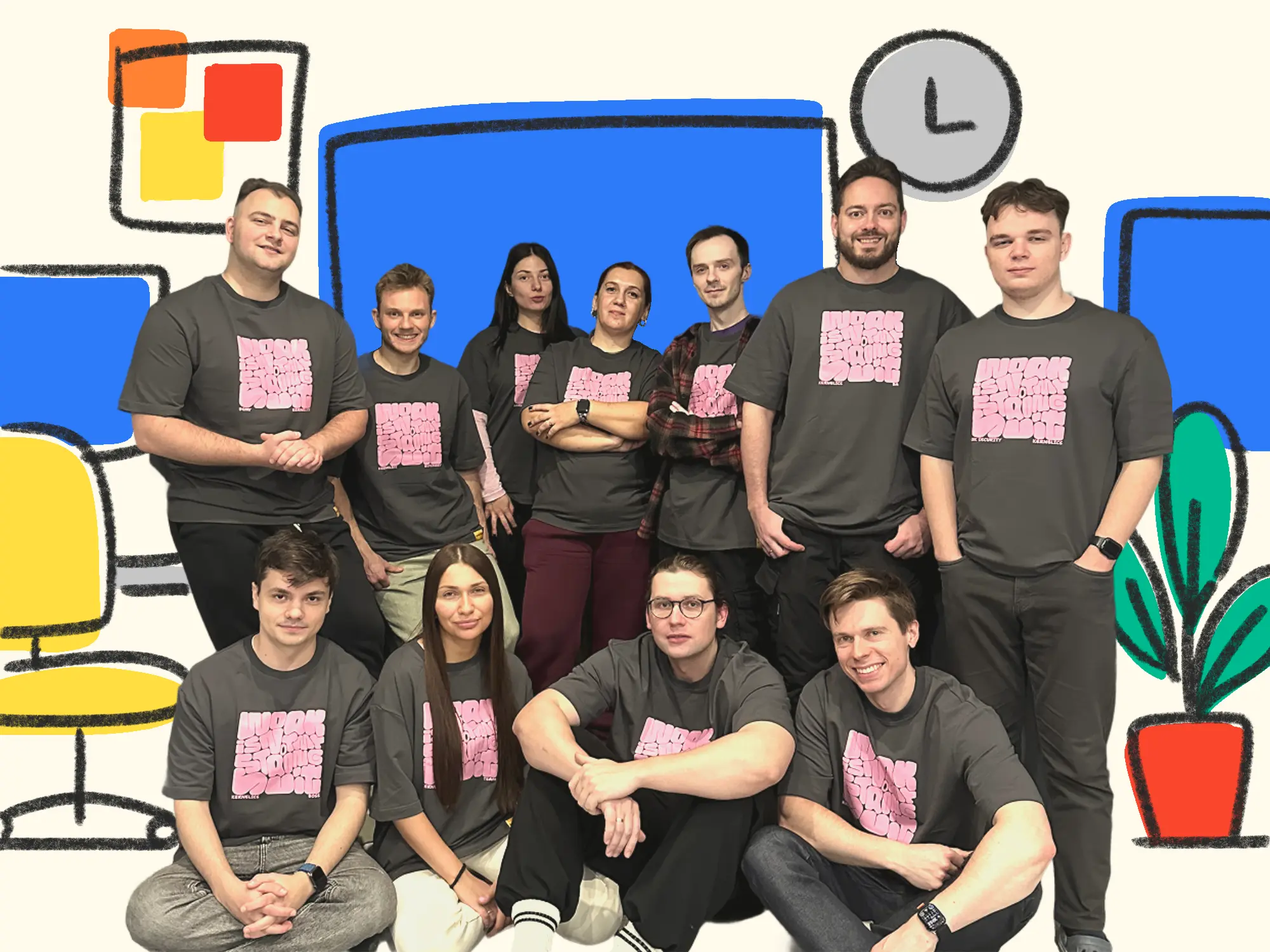
At Kernelics, we understand how important trust and communication are in outsourced development. Our
Clutch reviews speak to how we work and what we stand for.
If you're looking for a tech partner,
let’s collaborate, you’ll see what sets us apart.